

2025/12/10
Co-hosted Special Seminar with the Konrad-Adenauer-Stiftung: Decoding Europe's China Strategy ─ Prospects for Japan-EU Partnership in Economic Security
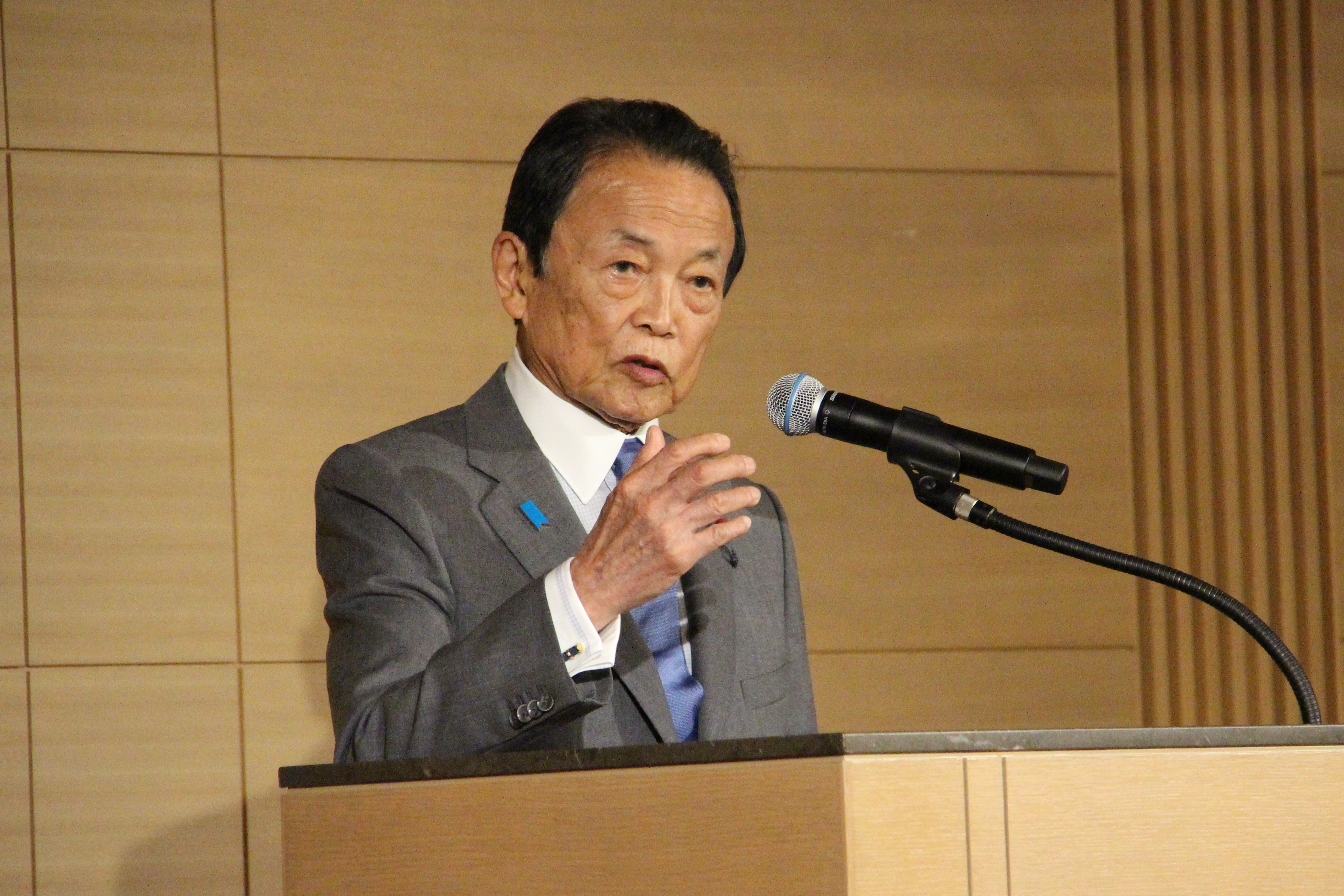
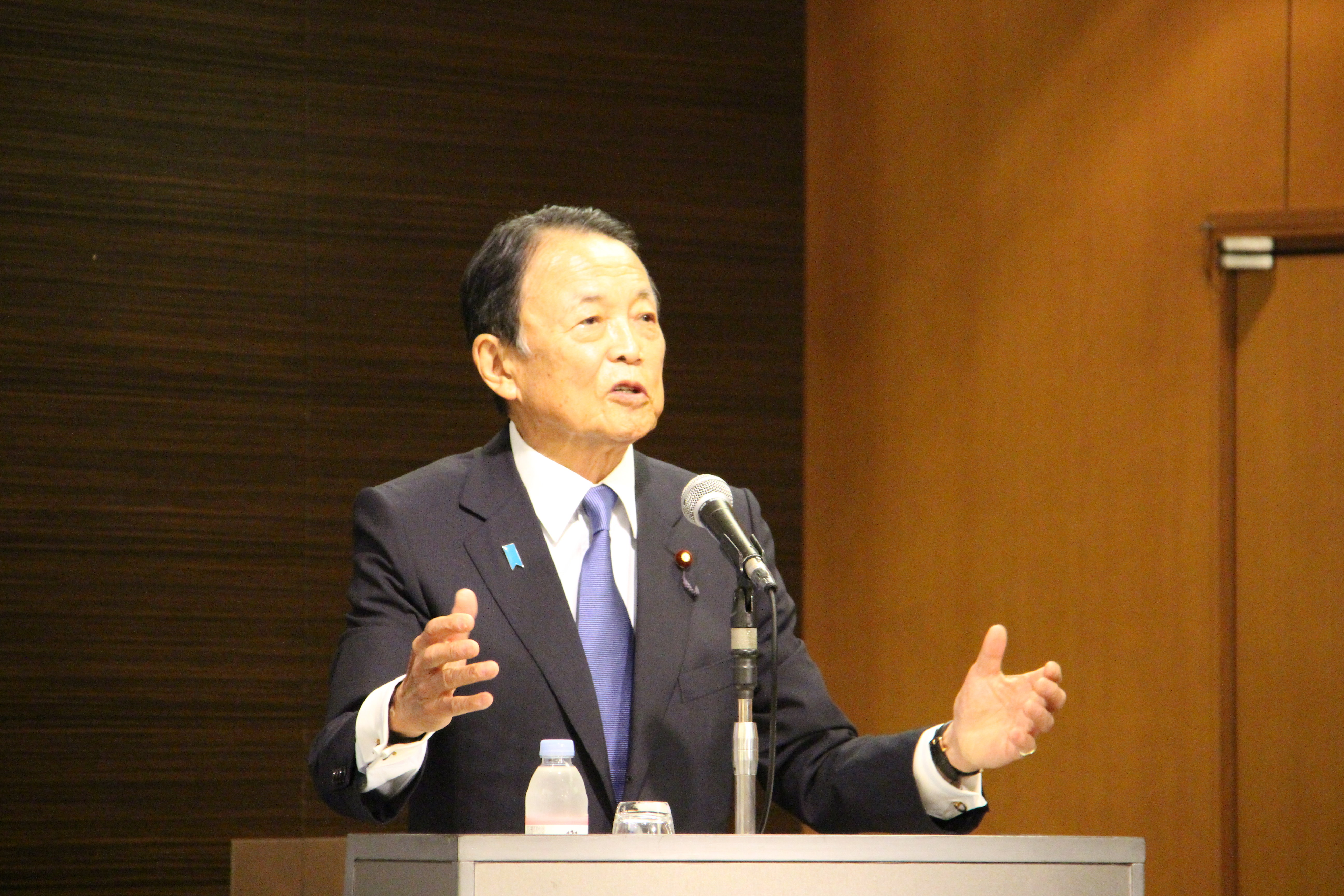
Opening remarks by NPI Chairman Taro Aso

Keynote speech delivered by Dr. Jan Chernicky of KAS
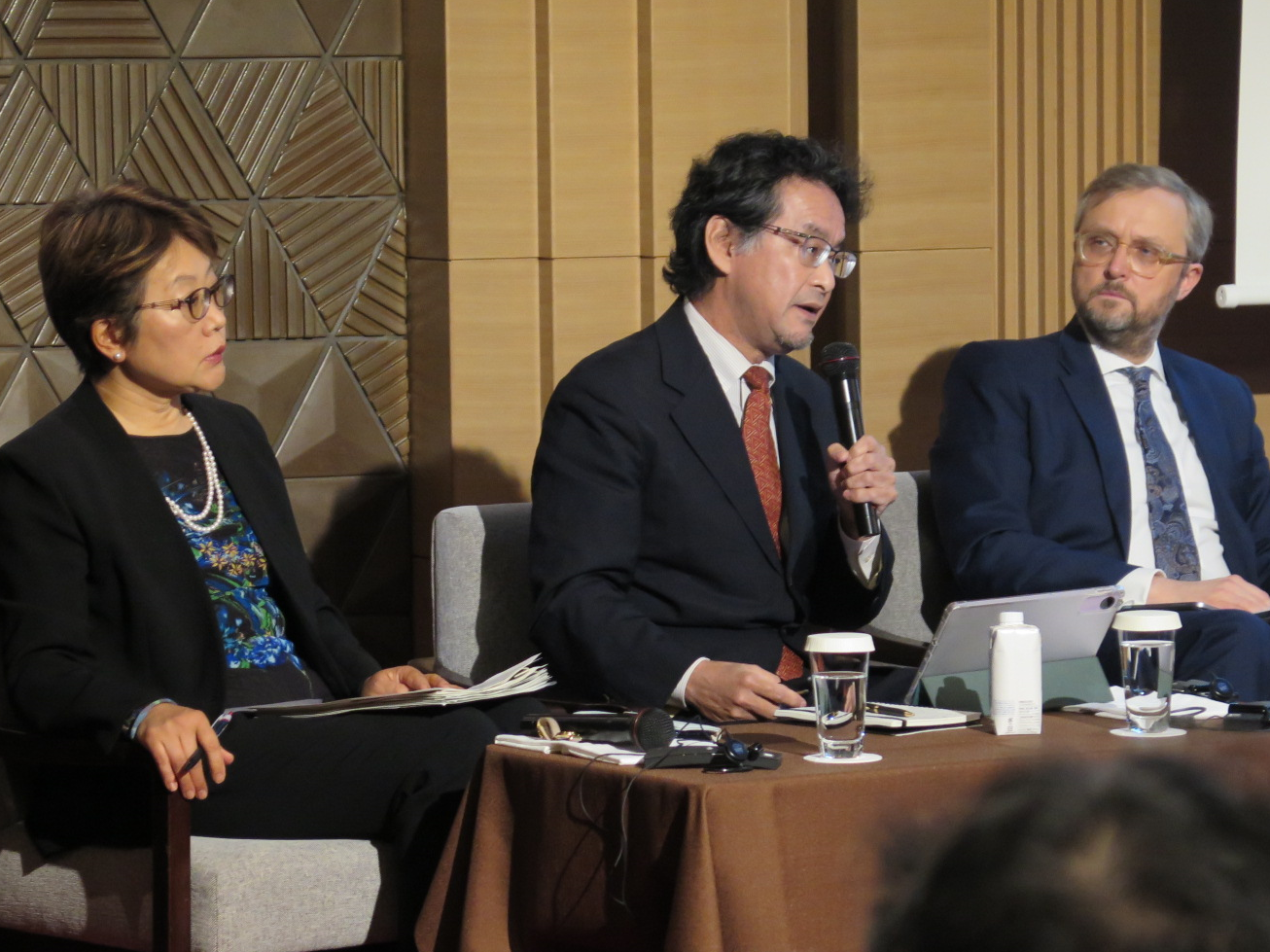
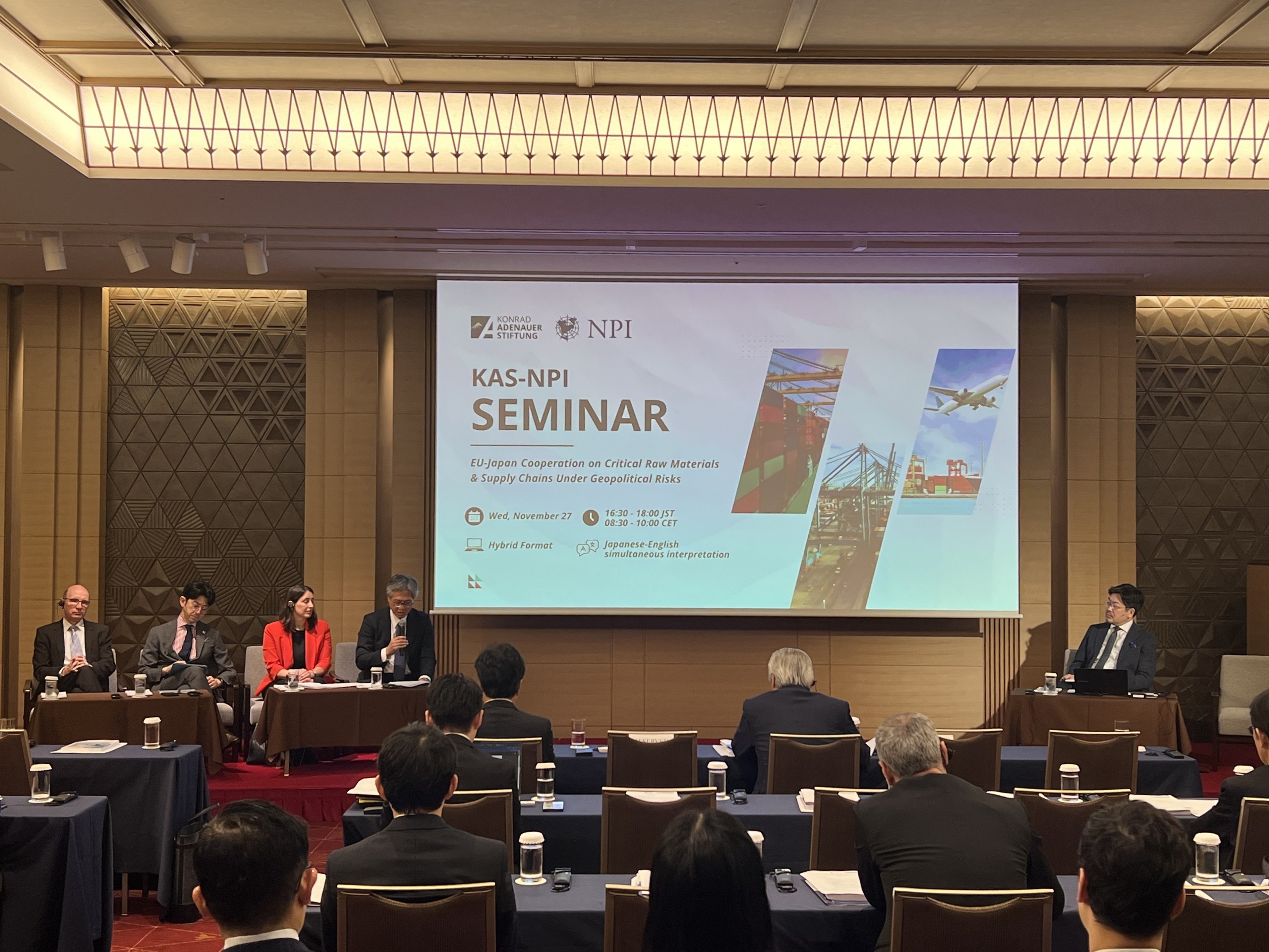
Panel discussion in progress
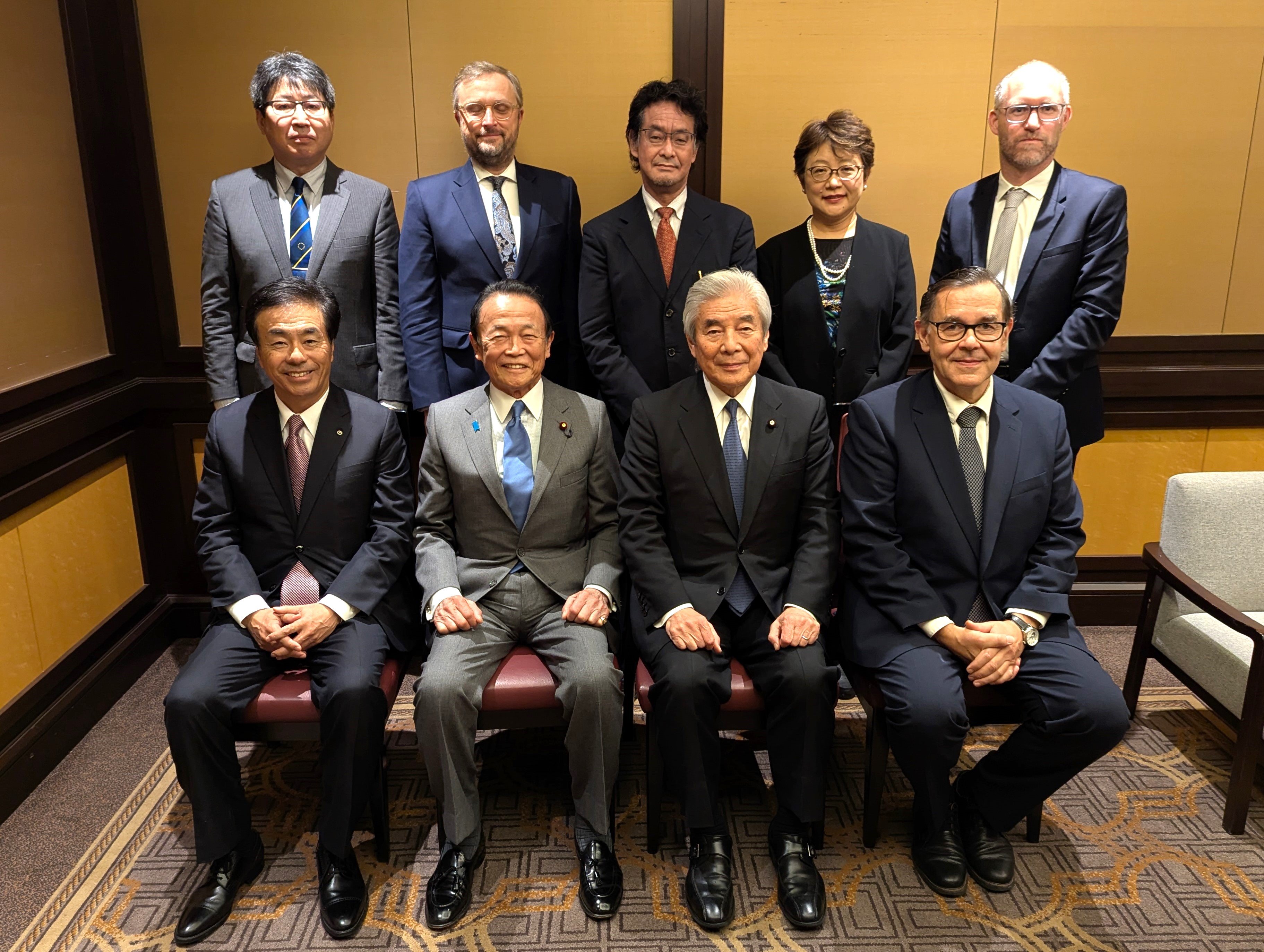
Speakers with NPI executives and the Director of KAS Tokyo office
The Nakasone Peace Institute (NPI) co-hosted, together with the Konrad-Adenauer-Stiftung (KAS), a special seminar entitled "Decoding Europe's China Strategy ─ Prospects for Japan-EU Partnership in Economic Security" at The Okura Tokyo on November 19, 2025. Against the backdrop of rising geopolitical tensions confronting Japan and Europe, the event served as a forum to examine, from multiple angles, the future direction of Japan-EU cooperation in the field of economic security.
In the opening remarks, Paul Linnarz, KAS Country Director Japan, stressed that Japan and the EU both have dependencies on global supply chains and imports of energy, minerals, and raw earths. But while Japan has paid attention to economic security issues since 2010, the concept is still unfamiliar to many in Europe, though it has started to be discussed more widely since 2022. Hence, the EU has much to learn from Japan in the domain of economic security.
Taro Aso, Chairman of NPI, followed by noting that in a rapidly changing international environment, close coordination among like-minded democracies is essential to sustain a free and open international order. He emphasized Europe's importance as a partner for Japan and highlighted the considerable potential of Japan-EU cooperation in economic security, including supply-chain resilience and rule-making─expressing hope that this seminar would mark a concrete step in that direction.
Part I: Keynote Address
Delivering the keynote, Dr. Jan Cernicky, Director for Economy and Innovation at KAS, noted that high economic dependence on China is a structural feature for both Germany and Japan, making complete decoupling unrealistic. However, this relationship must be managed, and with the US becoming less reliable as a partner, both countries should invest in defense capabilities to retain sovereignty in decision-making on global trade and avoid being pressured to follow US strategy with the threat of reduced American military presence in Germany and Japan.
Dr. Cernicky explained that Germany approaches China through a threefold lens─partner, systemic rival, and competitor─with growing weight in the latter two categories. Hence, it is advancing concrete policies centered on de-risking, rather than decoupling. However, he pointed out that achieving consensus among the EU as a whole remains a challenge, reflected in the fact that the latest strategic document on China is the EU-China Strategic Outlook from 2019, now six years old.
He further observed that China's centralized, subsidy-driven industrial policy is difficult to mirror in Germany, due to the complexities of the German system and the democratic and transparent nature of German policy, which allows China to respond quicker than Germany can. Instead of industrial policy, a better response is to focus on creating frameworks and encouraging innovations, allowing German engineers and scientists to find solutions without telegraphing them to China. There is substantial scope for Japan-EU cooperation that can assist here, in areas such as upholding a rules-based international order, strengthening cooperation in research, and infrastructure development.
Part II: Panel Discussion
Building on the keynote, a panel moderated by Shin Kawashima, NPI Executive Director of Research (and Professor, Graduate School of Arts and Sciences, The University of Tokyo), brought together Yoko Iwama (Professor, National Graduate Institute for Policy Studies), Satoshi Inomata (Senior Chief Researcher, IDE-JETRO), Steffen Hindelang (Professor of Law, Uppsala University; Executive Director and co-founder, CELIS Institute), and Jan Cernicky.
Panelists offered perspectives on opportunities and challenges for cooperation while acknowledging differences between Japan and the EU.
- Prof. Iwama traced the evolution of the EU's threefold framing of China (partner/competitor/systemic rival) and highlighted that the timing of shifts in emphasis differs between Japan and Europe─Japan's caution toward the "competitor" and "rival" dimensions emerged earlier (since the 1990s), whereas a comparable European reassessment accelerated after Russia's invasion of Ukraine. She also pointed to Europe's growing outreach to the Global South and argued for a proactive Japan-EU posture that goes beyond "defensive" economic security. Noting structural similarities between Japan and Germany as export-oriented manufacturing powers, she underlined shared challenges of China dependence and intensifying competition.
- Dr. Inomata emphasized a structural feature of global value chains: agglomeration of key production capacities in specific regions can create systemic "choke points." Drawing on recent examples, he illustrated how a single-point disruption can halt global supply networks. Presenting vulnerability analyses, he showed, for example, the very high dependence of a major German automaker on semiconductors from particular countries, arguing that multi-layered, hard-to-see dependencies can amplify latent risks. From a "deterrence by denial" perspective in economic security, he called for multinational, coordinated mechanisms to address these vulnerabilities.
- Prof. Hindelang outlined the structure and legal evolution of the EU's inbound investment screening and discussed the implications of rising Chinese investment for the EU's industrial base. He warned that state-backed behavior by Chinese firms may distort competitive conditions in the Single Market, and argued for strengthening legal frameworks to ensure transparency and a level playing field. He also saw significant room for Japan-EU cooperation in risk assessment methodologies, learning from each other extensively to take better risks and achieve a prosperous free society.
- Returning to the keynote themes, Dr. Cernicky reiterated that "meeting China head-on" with industrial policy would be inefficient, and instead emphasized Japan-EU cooperation in rule-setting, frameworks for critical raw materials, and joint efforts in research and infrastructure investment.
Concluding Remarks
Summing up the discussion, Prof. Shin Kawashima observed that while differences do exist─such as the timeline for reassessing China as partner/competitor/systemic rival and the varying connotations of the term "strategy"─these are natural and manageable, and many commonalities remain between Japan and Europe.
He highlighted three takeaways in particular:
Recognizing domestic and regional constraints on both sides, he concluded that sustained dialogue, careful understanding of each other's contexts, and incremental aggregation of common ground will be key to deepening Japan-EU cooperation going forward.
Speakers and Panelists
◆ Keynote Speaker
- Dr. Jan CERNICKY, Head of Department Economy and Innovation, Division Analysis and Consulting, KAS HQ Berlin
- Prof. Shin KAWASHIMA, Executive Director of Research, NPI
- Prof. Yoko IWAMA, National Graduate Institute for Policy Studies (GRIPS)
- Dr. Satoshi INOMATA, Senior Research Fellow, Development Studies Center, Institute of Developing Economies, Japan External Trade Organization (IDE-JETRO)
- Prof Steffen HINDELANG, Uppsala University / Executive Director and Co-Founder, CELIS Institute
◆ Panel Discussion Moderator
◆ Panelists