

2026/01/30
December 16, 2025 NPI Open Webinar: "Analysis of Japan-China Relations since November 2025─China's Intentions and Taiwan"

Why did Japan-China relations suddenly deteriorate? For just over a year leading up to the first half of 2025, bilateral relations had shown signs of recovery, including the gradual restoration of people-to-people exchanges between Japan and China. Against the backdrop of U.S.-China "competition" and China's domestic economic difficulties, bilateral interactions expanded through parliamentary exchanges and visits to China by Japanese business organizations. Reports of the resumption of imports of Japanese seafood were widely viewed as symbolic of a gradual "normalization" of relations. However, China, which had already been showing signs of heightened vigilance around the time of the formation of the Takaichi Sanae administration, purposefully characterized Prime Minister Takaichi's Diet remarks on November 7, 2025 as indicative of a "revival of militarism" and a "destruction of the postwar international order." Since then, China again reduced people-to-people exchanges, reinstated suspension of seafood imports, and intensified its military activities in areas surrounding Japan.
This webinar examined the current state of Japan-China relations taking into account China's domestic situation and foreign policy, as well as the relationship between China and the Taiwan issue.
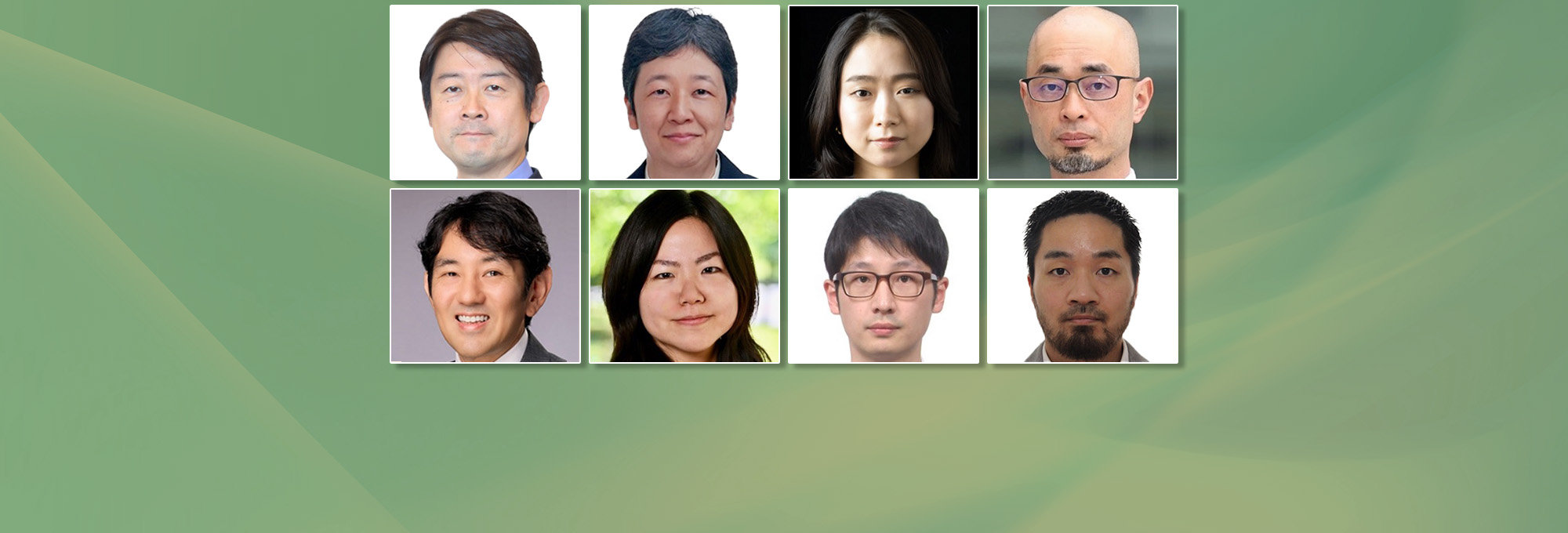
Panelists
On the day of the webinar, a lively and substantive discussion took place among participants from government ministries and agencies, corporations, academia, and the mass media. The main points of the discussion are as follows.
- The recent criticism directed at Japan is notable in that it directly concerns Taiwan, which China regards as a "core interest," and that China has employed the accusation of a "revival of militarism," a term previously employed in the context of security matters. Foreign Minister Wang Yi's statement that Japan had "crossed" a red line made clear the intensity of China's response.
- Partly due to the restrained approach adopted by the Trump administration, China appears to have a certain degree of confidence in its relations with the United States. At the U.S.-China leaders' meeting on the sidelines of APEC, China perceived itself as holding a relative advantage vis-à-vis the United States, thereby creating room for Beijing to adopt a tougher stance toward Japan.
- Prime Minister Takaichi's Diet remarks alone were not the trigger for the recent deterioration in relations. China had already been on alert due to factors such as Prime Minister Takaichi's meeting with President Lai Ching-te in April 2025 and her posting on social media photographs taken with the Taiwan representative at APEC. The actions by China also carried an element of deterrence aimed at other countries perceived as moving closer to Taiwan.
- In an effort to restrain Japan's revision of its security posture, China has sought to portray Japan in a negative way by employing such phrases as the "revival of militarism" and "the destruction of the postwar international order." Moreover, while contemporary China presents itself as a great power capable of building the international order, it frames Japan through a historical lens that emphasizes Japan's postwar status as a defeated nation with limited rights. It is therefore important to recognize that China's argument relies on a shifted timeline that selectively invokes the past.
- In terms of policy decisions, there are notable similarities to the 1982 textbook issue. At that time, Deng Xiaoping gave instructions to focus criticism on the Ministry of Education in order to avoid an overall deterioration of Japan-China relations, which ultimately led Japan to introduce the "Neighboring Countries Clause." In the present case as well, while China has applied a degree of economic coercion, policy restraint is evident--for example, Beijing has refrained from measures that would damage supply chains. The security-oriented narrative resembles the narrative that was employed during the Taiwan Strait crisis (1995-96), while the methods overlap with the narratives used during the Senkaku Islands issue (2012). However, in contrast to 2012, no anti-Japanese demonstrations have occurred, and even December 13, the anniversary of the Nanjing Incident, was marked by restraint.
- A Chinese commentary by Yang Bojiang (Qiushi, No. 23, 2025) constructs a carefully crafted narrative that does not necessarily amount to direct interference in Japan's internal affairs. While it argues that Japan's postwar exercise of the right of collective self-defense has been constrained, applying the objective of eliminating fascism to contemporary Japan is a stretch.
- Furthermore, China has challenged the legitimacy of the San Francisco Peace Treaty and shifted the focus of debate from the status of Taiwan to the "undetermined status of Okinawa." These actions are connected to China's current national strategy of portraying itself as a peaceful state while asserting the legitimacy of its efforts to reshape the international order. It is also possible that China will attempt to create the impression of a "G2" framework in which the United States and China cooperate to manage friction with Japan.
- While the Ministry of Foreign Affairs of the People's Republic of China is attempting to channel domestic nationalism outward while seeking to attract international public opinion, these efforts have not been successful. Meanwhile, in the security area, China has steadily advanced its actions, normalizing activities east of the First Island Chain and reinforcing its posture to deter U.S. approaches.
- Marking the 80th anniversary of the end of the war, China has proclaimed the narrative of the "three 80th anniversaries"--the victory in the "War of Resistance Against Japanese Aggression," the founding of the United Nations, and the "retrocession" of Taiwan--thereby emphasizing China's status as a victorious power and a custodian of the postwar order, as well as asserting that Taiwan is part of China.
- The Lai Ching-te administration in Taiwan has strengthened historical debate emphasizing Taiwan's own commitment to peace, freedom, and liberal democracy while implicitly likening China's current political system to fascism in order to justify the necessity of Taiwan's defense. In addition, the Democratic Progressive Party maintains that UN General Assembly Resolution 2758 does not address Taiwan's sovereignty and that China's interpretation of the resolution is opposed by multiple countries, particularly within the G7.
- While the ruling party in Taiwan has offered a measured assessment of Prime Minister Takaichi's remarks, the opposition parties have expressed concern about regional destabilization. As China seeks to use this opportunity to deepen divisions within Taiwan and to spread its own narrative internationally, some are concerned about a potential negative impact on Japan-Taiwan relations. While the U.S. response has attracted the most attention, opinions remain polarized, including regarding National Security Strategy (NSS) documents.
- Prime Minister Takaichi continued former Prime Minister Abe's policy of refraining from visits to Yasukuni Shrine and also maintained adherence to the Murayama Statement and the policy lines of the Kishida and Ishiba administrations. However, these efforts were effectively thwarted by China's response in the present episode.
- China is seeking to change the status quo through both words and actions; however, the more explicitly China articulates such objectives, the more likely the United States is to adopt a hardline stance and move closer to Japan. Moreover, China's rejection of the San Francisco Peace Treaty risks provoking the United States and the United Kingdom, both signatories to the treaty, and Germany has also recently expressed concern regarding China's actions.
- In Taiwan, the phrase "a Taiwan contingency is a Japan contingency" has been received with considerable impact. At the same time, it remains necessary for Japan to continue providing clear explanations to Taiwan that avoid misunderstandings about the legal and political hurdles governing Japan's exercise of the right of collective self-defense and the use of force.
- China's exercise of a certain degree of restraint may be attributable in part to domestic economic factors, but it is also likely the result of efforts due to its strategy of assessing the responses of Japan and the United States while seeking to corner Japan with U.S. acquiescence. Depending on Japan's future actions, the pressure exerted by China could intensify further.
- Looking ahead, close attention will focus on President Trump's planned visit to China in April 2026 and on China's response as host of APEC 2026 China in Shenzhen in November 2026. The current issue is likely to persist at least until the revision of Japan's three key security-related documents at the end of 2026, but it may extend through the 2027 Party Congress and potentially for several years beyond. Therefore, diplomatic efforts carefully timed to cool the heightened situation will be essential.