

2026/03/18
February 22, 2026 NPI Open Symposium: "Status in the Fifth Year of the Invasion of Ukraine: Where will Russia's War Lead the Former Soviet Republics?"
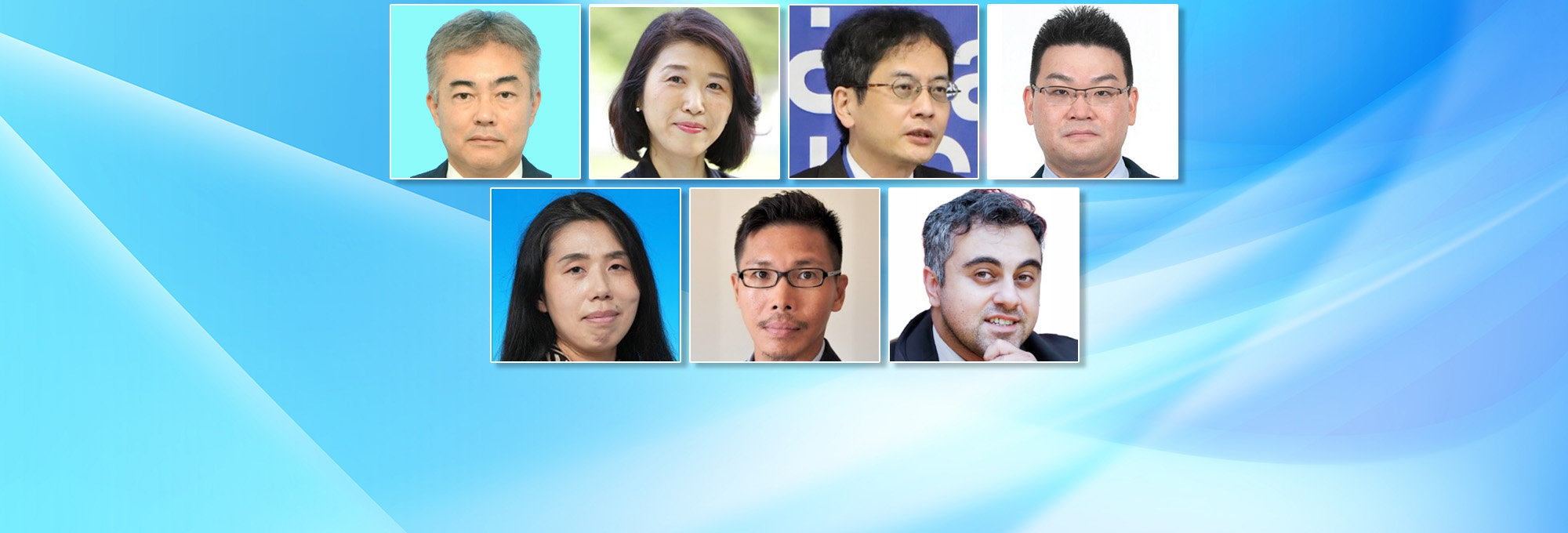
On February 22, 2026, as the fifth year of Russia's invasion of Ukraine approaches, Nakasone Peace Institute (NPI) held a symposium entitled "Status in the Fifth Year of the Invasion of Ukraine: Where will Russia's War Lead the Former Soviet Republics?" in a hybrid format, with both in-person and online participation.
Opening Remarks were delivered by NPI President Nakasone Hirofumi followed by a Keynote Address by H.E. Yoshida Kensuke, Ambassador Extraordinary and Plenipotentiary of Japan to the Republic of Latvia. In Part 1 of the symposium, the results of field research conducted in Latvia in August 2025 were reported.
In Part 2, six researchers from the NPI Russia Study Group participated in a Roundtable Discussion. The speakers examined the impact of the war in Ukraine on the former Soviet republics from a variety of perspectives and discussed each country's current status, outlook, and the prospects for peace. The main discussion points follow.
Opening Remarks
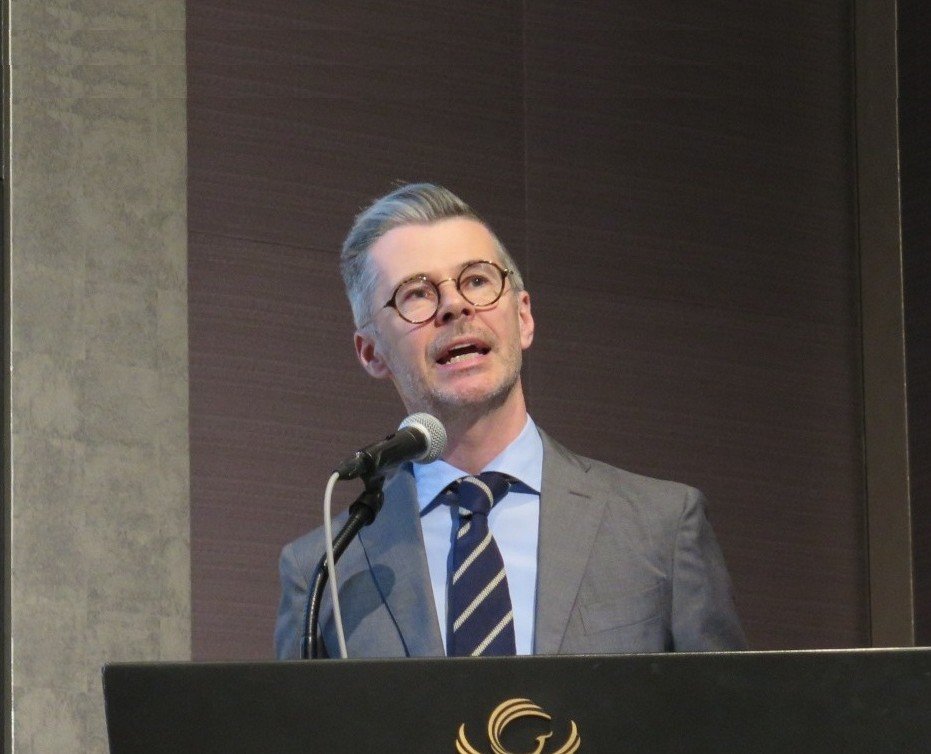
Keynote Address
Moderator
Panelists
Opening Remarks by NPI Vice Chairman and President Nakasone Hirofumi are summarized as follows:
- As President of the Japan-Latvia Parliamentary Friendship Association, NPI President Nakasone proposed holding this symposium to widely share the results of the field research conducted in Latvia by NPI researchers. Latvia, which has a history of hardship including its annexation by the Soviet Union and which now stands on the frontline of North Atlantic Treaty Organization (NATO), is an important friendly country for Japan, particularly in the field of security.
The Keynote Address by Ambassador Yoshida Kensuke is summarized as follows:
- Latvia is located on a geopolitical faultline where the powers of the West and Russia counterbalance each other. While Russian is the native language of just under 20% of the population, when including those who speak Russian at home, the figure is estimated to reach about 40%. Amidst increasing diversification and division, political support has also diversified. Latvia is seeking to strengthen deterrence against potential war scenarios by increasing its defense budget and reinforcing its NATO presence.
Part 1 Report on the Latvia Research Visit
- Exiled media outlets such as Novaya Gazeta Europe are based in Riga. However, they are facing financial difficulties due to declining support and restrictions on receiving donations. Nevertheless, they continue independent reporting by using various platforms and cooperating with networks of anonymous journalists inside Russia.
- Political forces representing Russian speakers have become fragmented, and their support is spread across multiple parties. Against the backdrop of the perceived threat from Russia, Latvia has been strengthening solidarity with NATO and the European Union (EU) and increasing support for Ukraine. Although many Russian speakers are not pro-Vladimir Putin, their integration into Latvian society cannot be said to be progressing smoothly, and, in some regions, forces with pro-Russian tendencies retain influence, leaving societal integration a sensitive issue.
- Latvia is exposed to multifaceted attacks such as the weaponization of refugees, drone attacks, and information warfare and has explicitly designated the information sphere as a domain of national defense. As countermeasures, Latvia is moving toward a comprehensive security framework of "total defense," including withdrawal from the Mine Ban Treaty (Ottawa Treaty) and initiatives such as the "Drone Wall" concept, in cooperation with neighboring countries.
Part 2 Roundtable Discussion
- The invasion of Ukraine has lowered the threshold for the use of force, making it urgent to adapt to new forms of warfare--such as the disposable use of inexpensive drones--and to strengthen the defense industry. At the same time, Russia has shown resilience in maintaining a wartime economy, supported by a functioning state bureaucracy centered on technocrats.
- Although war fatigue and dissatisfaction are spreading within Russian society, a passive belief that protests are meaningless has led many to tolerate the regime's continued hardline policies. In addition, relatively few war casualties come from major cities, and mobilization has been concentrated in poorer regions such as Siberia, where high pay is offered, resulting in clear regional disparities.
- To circumvent economic sanctions, Russia has significantly shifted its external economic relations by expanding trade with countries in the "Global South," including India and countries in the Middle East. In addition to increased crude oil exports to India, Russia is also seeking to rebuild its own supply chains by developing new logistics routes such as the International North-South Transport Corridor (INSTC).
- While Georgia, once seen as a leading proponent of democracy, has been strengthening a more pro-Russia stance, Armenia has been moving away from its dependence on Russia and toward diversifying its diplomacy with Western countries and India. Meanwhile, Azerbaijan has increased its autonomy as an energy supplier. Across the region, spheres of influence are being reshaped, including through diversification via the development of new logistics routes.
- Countries in Central Asia maintain economic and security relations with Russia in parallel with strengthening ties with other countries such as China to avoid excessive dependence on Russia. In the context of great-power competition, Central Asian countries use the "Central Asia plus one" format to pursue actual benefits through a multifaceted and more autonomous diplomatic approach.
- Current peace proposals serve only to postpone the problem or freeze the conflict, while in the occupied territories a dilemma is emerging as Russification--such as the forced issuance of passports by Russia--continues. Rather than a mere ceasefire, it is essential to establish legally binding arrangements and an operational deterrence system that would make repeated invasion institutionally impossible. The greatest challenge is how to ensure both territorial integrity and human security.